Creating a Legacy Album: Turning End-of-Life Photos into an Heirloom for Your Family
Practical guidance on selecting, sequencing, captioning, and printing end-of-life, celebration-of-life, and family portraits so you can assemble a durable, meaningful legacy album for future generations.
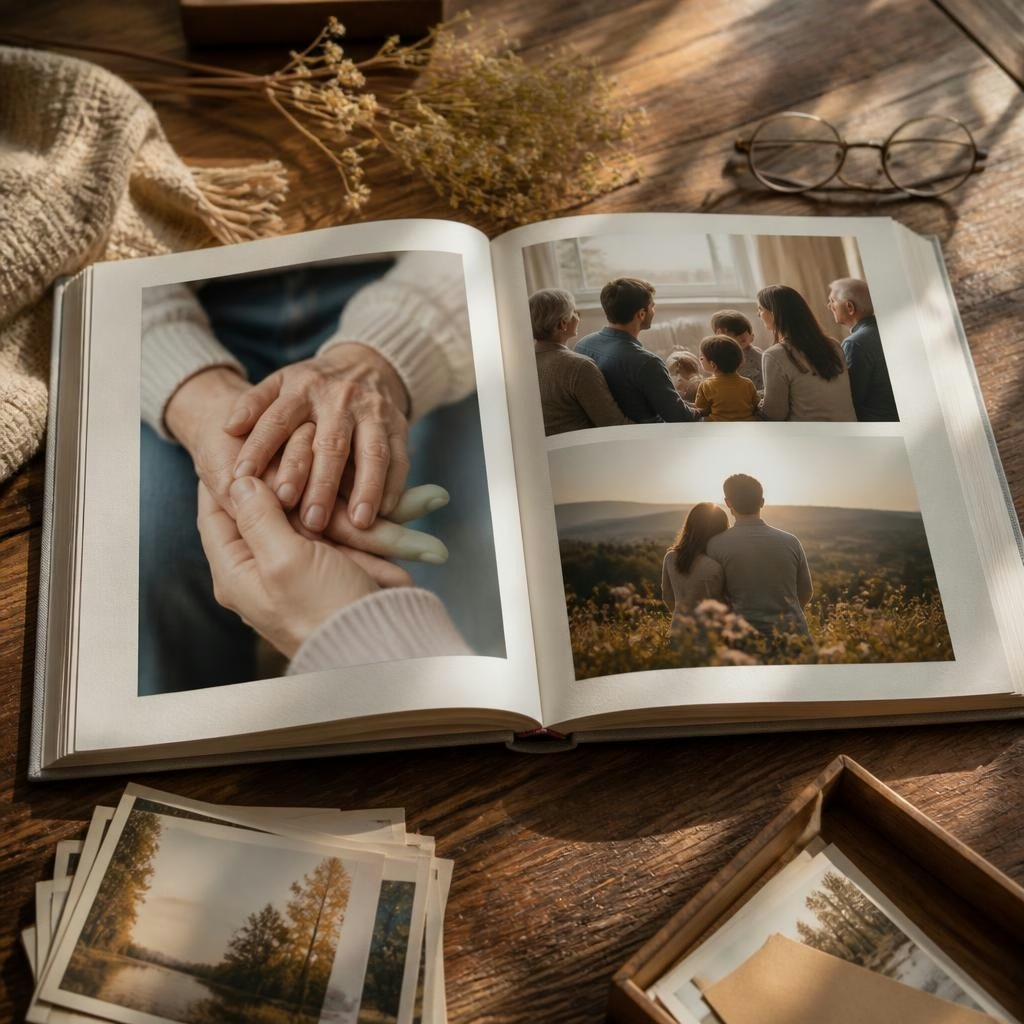
Why a Legacy Album Matters
A thoughtfully assembled legacy album does more than collect images; it preserves memory, context, and family identity for future generations. Photographs made at the end of life, during celebrations of life, and in portrait sessions often capture deeply personal details — expressions, gestures, and relationships — that written records alone cannot convey. When created with intention, an album becomes a lasting object that family members can turn to for comfort, storytelling, and connection.
Define the Purpose and Scope Before You Begin
Start by deciding what you want the album to accomplish. Is it a concise keepsake focused on a final chapter, a life retrospective spanning decades, or a thematic album that emphasizes family gatherings and cultural traditions? Clarify the intended audience (immediate family, extended relatives, future generations) and the desired tone (celebratory, contemplative, documentary). This early planning will guide photo selection, page count, and the balance between candid moments and formal portraits.
Gathering and Choosing the Right Images
Collect all relevant images from portrait sessions, funeral or celebration-of-life coverage, and family archives. Prioritize photos that hold emotional resonance: those that show personality, relationships, or meaningful objects. Include a mix of wide shots that establish setting, mid-length family group images, and close details such as hands, personal items, or meaningful mementos. When assessing technical quality, favor images with clear focus and good exposure; however, do not discard imperfect photos that have strong sentimental value.
Organizing Photos into a Narrative Sequence
Think of the album as a visual story. Common approaches include chronological sequencing, a thematic arrangement (family, career, hobbies), or a hybrid that groups major life phases while placing special moments in highlight spreads. Use page turns to create emotional transitions: a single image can serve as a quiet pause, while a two-page spread can showcase a pivotal event. Consistency in image size and crop helps the album feel cohesive; deliberate variation can be used to emphasize particular photographs.
Captions, Notes, and Preserving Context
Captions provide essential context — names, dates, locations, and brief notes about the circumstances or emotions in a photo. Keep captions short and factual, but add occasional anecdotal notes from family members to add personality. Consider including short written remembrances, transcribed conversations, or scanned letters to enrich the visual record. If multiple family members contribute memories, note contributors so future readers understand perspective and provenance.
Printing, Materials, and Long-Term Durability
Choose archival-quality materials to maximize longevity. Look for acid-free papers, pigment-based inks, and binding methods designed for frequent handling such as lay-flat or Smyth-sewn bindings. Hardcover albums with sewn bindings tend to be more durable than glued softcovers. If you plan to display the album, select covers and slipcases that protect from light and dust. Work with a reputable print lab that can provide archival specifications and color-management proofs before final printing.
Storage, Sharing, and Digital Backups
Store the physical album in a cool, dry place away from direct sunlight. Create a high-resolution digital copy of the finished album (PDF or high-quality image files) and back it up in multiple locations — local external drive and a secure cloud service. Share reduced-resolution versions with family members if appropriate, and maintain a list of who has original files. Clear permissions and conversations about privacy are important when images document sensitive end-of-life moments.
How a Specialized Photographer Can Help
Working with a photographer experienced in end-of-life and celebration-of-life coverage can simplify curation and ensure a respectful visual record. En Vida Tribute Photography offers portraiture sessions, funeral and celebration-of-life coverage, and specialized seasonal sessions that reflect cultural traditions. A photographer can help identify images that will work well in album layouts, provide high-resolution files suitable for archival printing, and collaborate on sequencing and captions so your legacy album honors your intentions. Clients in the Houston area and surrounding communities often find that this partnership helps translate fragile moments into a durable family heirloom.
Article by
En Vida Tribute Photography
EN VIDA TRIBUTE PHOTOGRAPHY - Based in Houston, skilled and compassionate photographer, Adanary Jacques offers families unique visual storytelling focused on this side of a loved one's final moments of life's journey, with honor, compassion and dignity. Portraiture sessions, funeral and celebration of life coverage available from $300. Adanary, a versatile photographer and visual artist whose work spans across different styles, also enjoys conceptual styles blending portraiture with her heritage to create vibrant imagery of Catrinas. Honoring the Mexican tradition of Dia de los Muertos as a way to a deeper meaning and appreciation of life while we are still here - "EN VIDA". Limited Edition sessions are scheduled throughout Sept - Nov.