Understanding Healthy Vocal Technique for Young Singers: An Anatomical Approach
A parent-friendly guide to how anatomically informed vocal teaching protects young voices, covering breath support, resonance, posture, signs of strain, and what to look for in a voice teacher.
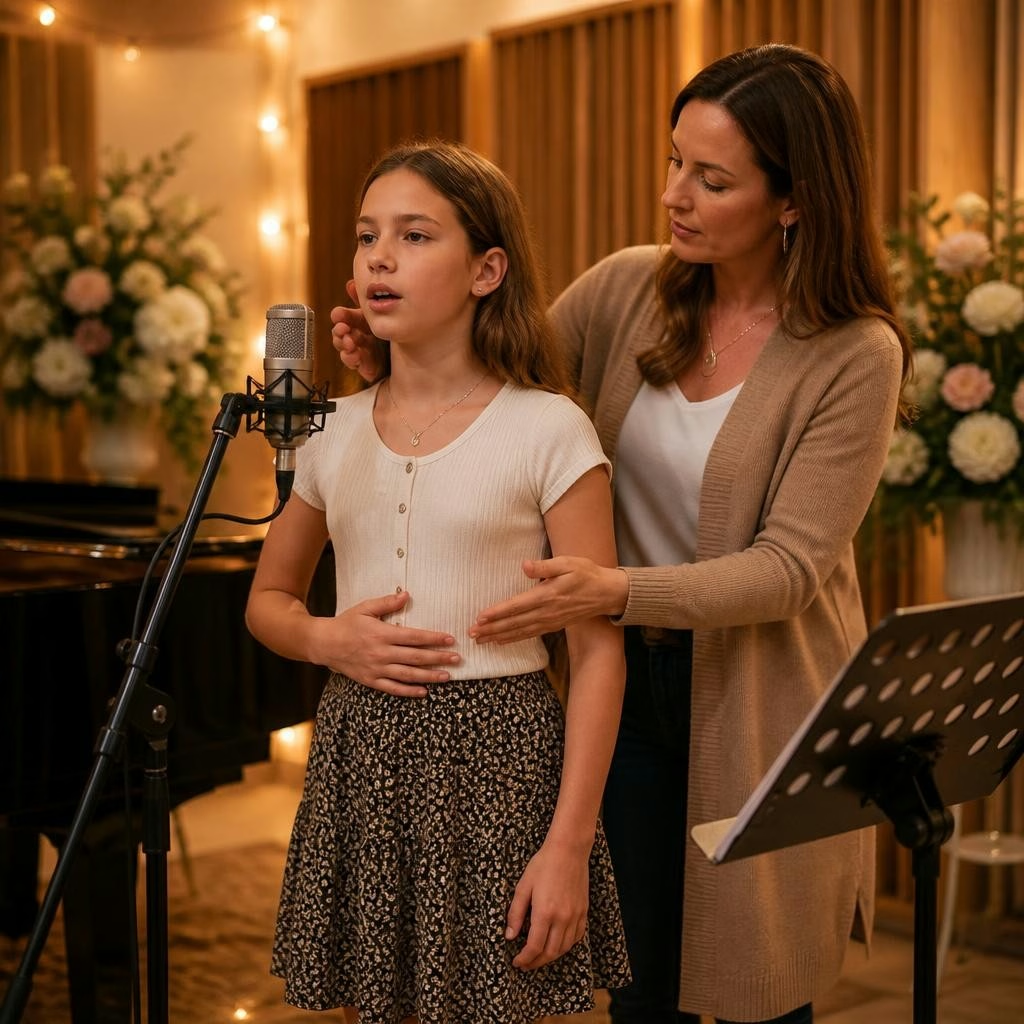
Why an anatomical approach matters for young voices
Young singers are still growing, and their vocal mechanism responds best to careful, age-appropriate instruction. An anatomically informed approach explains where sound and breath come from in simple terms, helping students learn healthy habits rather than pushing through tension. That foundation reduces the chance of strain and sets up reliable technique for any style the singer may pursue.
Breath support made simple
Breath support is the engine of singing. For young singers, think of it as learning to manage steady airflow rather than taking bigger breaths. Encourage low, relaxed inhalations that expand the lower ribs and belly, then controlled exhalations on a steady sound (for example, a sustained hiss or gentle vowel). Short, focused exercises—one slow inhale followed by a slow, steady exhale while maintaining a steady pitch—build control without forcing the throat.
Resonance and 'placement' without tension
Resonance is how a voice colors and carries; it comes from shaping vowel sounds and allowing vibrations to resonate in the mask of the face and head instead of pushing from the throat. Simple, child-friendly ways to explore resonance include humming and feeling gentle vibrations around the lips, nose, and cheekbones. These sensations help students find brighter, easier tone without tightening the larynx.
Posture and alignment for efficient singing
Good singing posture supports breath and reduces unnecessary muscle tension. Teach young singers to stand or sit with a neutral spine, relaxed shoulders, and an open chest—think 'tall but relaxed.' Avoid rigid 'military' posture; the goal is freedom for the breath to move. Use short posture checks during practice to reinforce how alignment affects sound and stamina.
How anatomically informed teaching protects growing voices
Anatomically informed teachers explain the body in clear, age-appropriate terms and progress skills step by step. This kind of instruction emphasizes correct coordination—breath, vocal fold closure, and resonance—rather than forcing volume or mimicry. As noted by a parent who described their child’s lessons, teachers who build from the ground up and point out where sounds and breaths originate help students improve technique while staying safe and comfortable.
Choosing lessons and what to expect in a healthy program
Look for a teacher who balances structure and encouragement, tailors repertoire to the student’s current abilities, and includes reading, diction, and musical goals alongside technical work. Lessons should introduce exercises progressively, address sight-singing and tone production when appropriate, and offer clear practice goals. Aria Music by Priscilla Salisbury provides voice lessons with an emphasis on healthy classical technique and individualized instruction for students in Texas, including Houston.
Practical tips for parents and signs to watch for
Keep practice brief and consistent—short daily sessions are more effective than infrequent long ones. Encourage gentle warm-ups, hydration, and vocal rest after heavy use. Warning signs that merit teacher attention (or a pause in singing) include persistent hoarseness, throat pain, loss of voice for several days, or a change in pitch that doesn’t resolve with rest. If you notice these, consult your voice teacher—an informed instructor can adjust exercises, repertoire, and pacing to protect the voice.
Customer review


Article by
Aria Music by Priscilla Salisbury
Elevate your special day with Aria Music by Priscilla Salisbury, a premier wedding service that brings a uniquely elegant and sophisticated musical experience to ceremonies across Texas. Priscilla, a professional opera singer, provides stunning vocal performances that add a touch of timeless class to your wedding, gala, or special event. Whether you are planning a grand affair or an intimate gathering, let her exquisite voice create a beautiful and memorable atmosphere for your celebration. Aria Music also offers personalized vocal lessons.