Houston Wedding Music Checklist: 10 Key Vocal Moments You Don’t Want to Miss
A practical checklist for Houston couples that identifies the ten most important ceremony moments to feature live vocals, with song-selection tips, vocal arrangement guidance, and venue- and rehearsal-related considerations to help your ceremony sound its best.
Why plan vocal moments in your ceremony
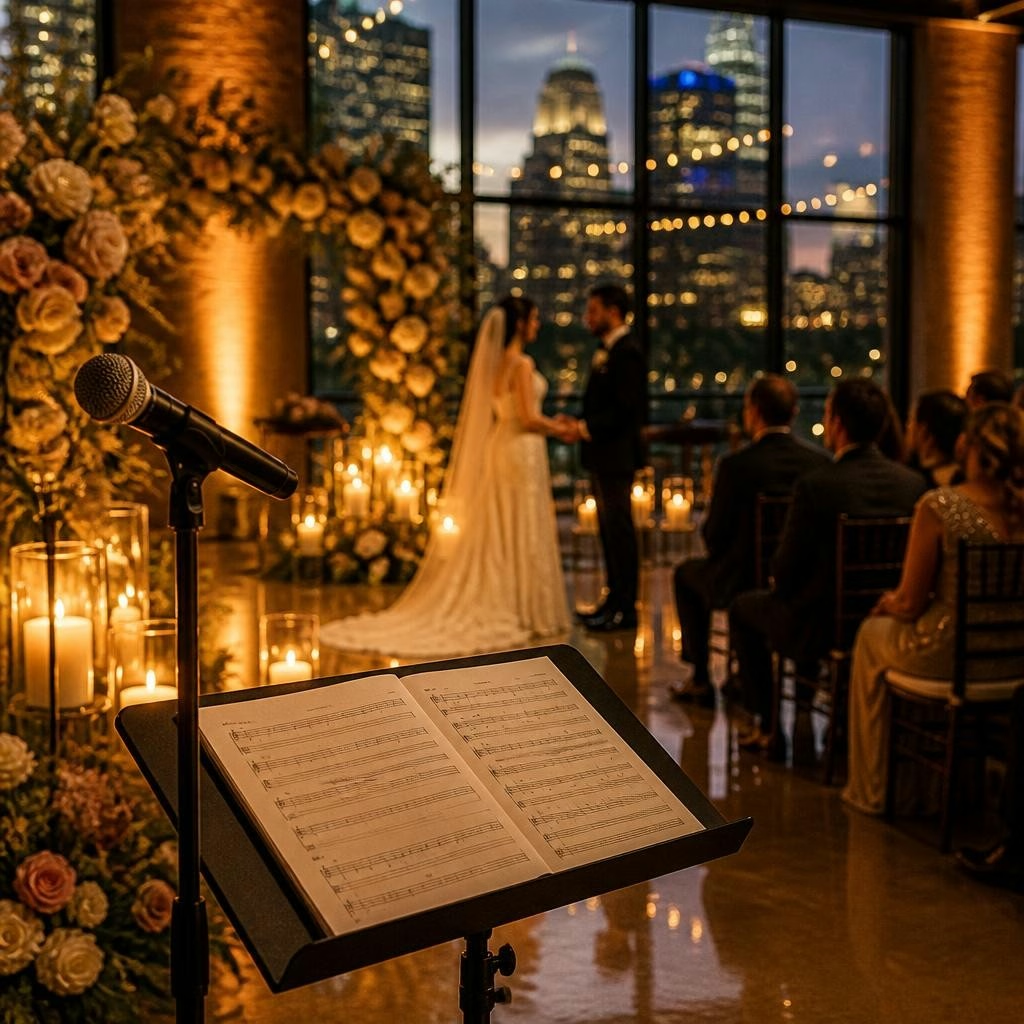
Live vocals give a wedding ceremony immediate emotional presence and clarity that recorded music often cannot replicate. Planning where to place a singer — and which songs or styles suit each moment — keeps the ceremony flowing and helps your vocalist prepare musically and technically. This checklist focuses on ceremony moments where a trained vocalist adds the most value, and includes practical tips on choosing music and coordinating with your venue in Houston and throughout Texas.
The ten vocal moments every couple should consider
1) Prelude (guests arriving) 2) Processional (entrance of bridal party and couple) 3) Opening hymn or welcome 4) First reading response or psalm 5) Unity ritual (candle, sand, or other rite) 6) Solo or duet during vows or ring exchange (optional) 7) Communion or ceremonial music 8) Special dedications or musical tributes 9) Blessing or final prayer response 10) Recessional (exit). Identifying which of these you want sung will shape timing, rehearsal needs, and song choices.
Prelude and processional: setting tone and pace
Prelude music establishes atmosphere; choose short, recognizable pieces or a medley that invites quiet and attention. For the processional, pick music that matches walking speed and ceremony formality — slower tempos for formal entrances, moderate tempos for quicker processions. Confirm the exact number of people in the processional so the vocalist can coordinate cues and phrasing. If your venue has a long aisle (common in many Houston churches and chapels), allow for slightly longer musical sections so the singer can shape the music to movement.
Readings, psalms and unity rituals: vocal approaches
For readings and psalms, a single cantor-style vocal or a softly sung refrain between verses keeps focus on the text. If your ceremony includes a unity ritual, consider a short vocal interlude or an intimate song (30–90 seconds) that underscores the action without interrupting flow. Choose repertoire with clear diction and moderate range so words remain intelligible. For religious ceremonies, verify whether the congregation is expected to join; a trained singer can lead responses or sing a solo that supports congregational participation.
Vows, special dedications and the recessional
Most couples prefer ambient, unobtrusive music during vows; if you want a singer, select a brief, gentle piece that won’t compete with spoken words. Special dedications or musical tributes are opportunities for more expressive, longer solos — confirm duration limits with your venue so the program stays on schedule. For the recessional choose an uplifting, decisive piece that signals celebration; make sure the vocalist and any instrumentalists practice the exact cue so the exit’s timing is smooth.
Choosing repertoire and arranging for a vocalist
When selecting songs, consider: lyrical content (appropriate to the moment), tempo (matches movement), length (fit within ceremony timing), and range (comfortable for the singer). If you want music in multiple languages or bilingual presentation, choose pieces the vocalist can perform convincingly; local professionals and workshop leaders often bring bilingual experience that benefits multicultural ceremonies. Ask your vocalist about possible transpositions, shortened arrangements, or pared-down versions to suit your space and ceremony length.
Venue, acoustics and technical details to confirm
Before finalizing musical plans, confirm venue policies: whether live amplification is allowed, if an organ or piano will be provided, access for rehearsals, and any noise or time restrictions. Indoor acoustics can favor unamplified voices, while outdoor sites usually require microphones. Share floor plans and arrival times with your vocalist so they can plan sound checks and select appropriate repertoire. Also confirm whether the venue requires liability forms or vendor credentials — those practicalities help avoid last-minute problems.
Working with your vocalist and next steps
Hire a vocalist with direct experience in your ceremony style and with the flexibility to rehearse with instrumentalists or accompanists. If you’re considering a professional opera singer or an experienced wedding specialist, ask about rehearsal availability, bilingual capabilities, and familiarity with liturgical pieces if your ceremony is religious. Many couples value instruction and preparation that focus on diction, breath support and phrasing so the singer’s delivery is clear and confident on the day. Start planning song choices and run a full ceremony rehearsal when possible to confirm cues, lengths, and microphone placement — then enjoy the performance knowing the musical moments are designed to support the meaning of your ceremony.
Article by
Aria Music by Priscilla Salisbury
Elevate your special day with Aria Music by Priscilla Salisbury, a premier wedding service that brings a uniquely elegant and sophisticated musical experience to ceremonies across Texas. Priscilla, a professional opera singer, provides stunning vocal performances that add a touch of timeless class to your wedding, gala, or special event. Whether you are planning a grand affair or an intimate gathering, let her exquisite voice create a beautiful and memorable atmosphere for your celebration. Aria Music also offers personalized vocal lessons.