Houston Leather Jacket & Heavy-Coat Alterations: What Sam’s Tailoring Can — and Shouldn’t — Do
A clear, practical guide to common leather and heavy‑coat alterations Houston customers ask for, what’s realistic or risky, how Sam’s Tailoring evaluates these jobs, and practical tips for preparing garments and getting the best outcome.
Common leather and heavy‑coat alteration requests
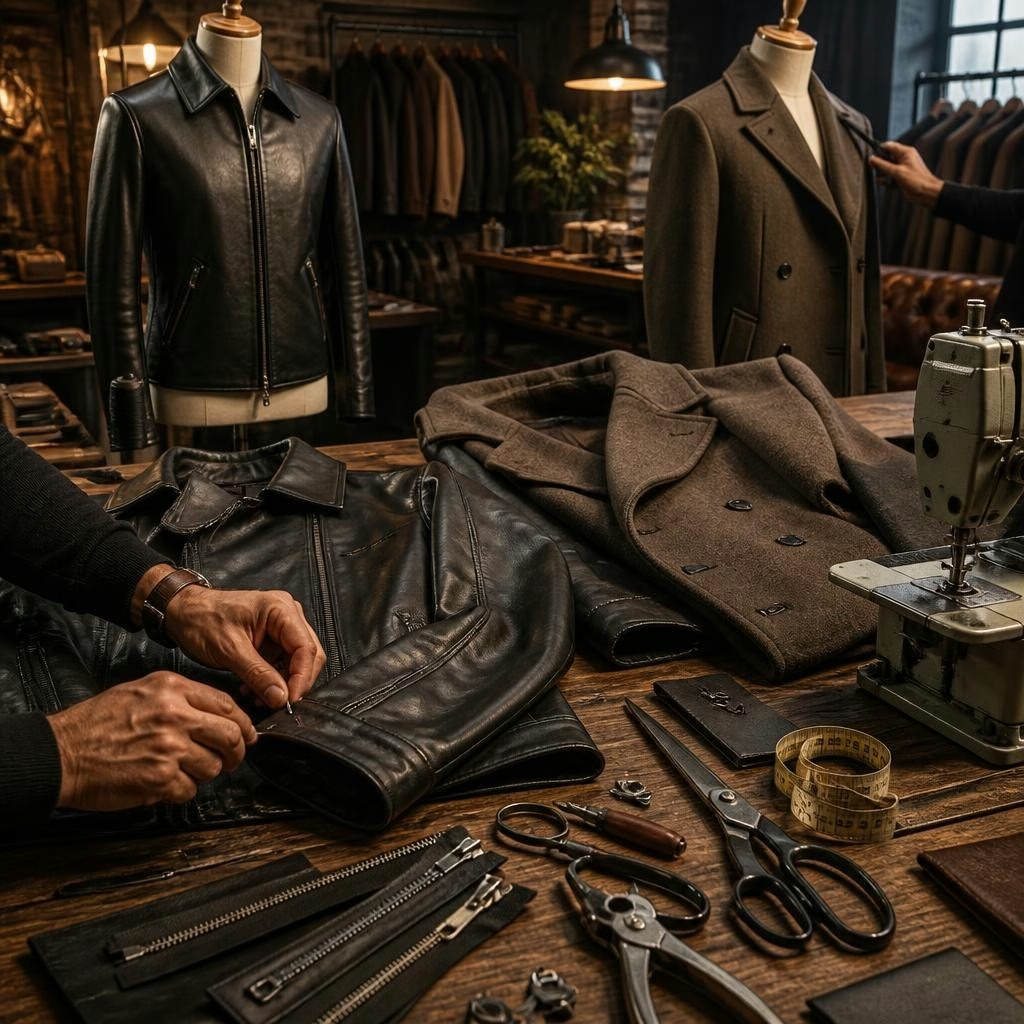
Customers typically bring leather jackets and heavy coats for a handful of standard jobs: shortening sleeves, tapering arms or cuffs, taking in or letting out the sides, adjusting shoulders for a cleaner fit, shortening the body length, repairing or replacing zippers, patching small tears or holes, and reattaching or repairing linings. Sam’s Tailoring lists jacket and coat adjustments, hem work, zipper replacement, leather repair and general repairs among its services, so these are the alterations you can reasonably expect them to evaluate.
What alterations are normally realistic
Moderate changes — such as shortening sleeves, tapering sleeves or pant-like lining adjustments, taking in side seams a modest amount, replacing a worn zipper, or patching a small hole — are commonly successful on leather and heavy outerwear. These jobs generally preserve the garment’s structure and appearance and are routine for experienced tailors. Reviews of Sam’s emphasize careful workmanship and good fit on jackets and sport coats, which supports that routine resizing and zipper work are handled reliably.
What alterations carry higher risk
Major reshaping or dramatic size changes are riskier with leather and heavy fabrics. Very large take‑ins or let‑outs, radical changes to sleeve pitch or shoulder construction, or repeated restitching in the same area can weaken seams, create puckering, or change how the garment hangs. Replacing structural components like heavily worn collars or completely rebuilding a lining can also be complex and may reveal hidden damage. When an alteration could alter the garment’s original construction significantly, a careful inspection and frank discussion of limits and possible visual differences are essential.
How a specialist like Sam’s Tailoring evaluates and protects leather items
Before any work begins, Sam’s Tailoring typically inspects the garment to check leather thickness, seam strength, hardware condition, and the state of the lining. Based on that inspection, the team will discuss realistic outcomes and options. For leather and heavy coats, tailors favor reinforcement around stress points (zippers, underarms, pocket edges), use heavy‑duty thread and appropriate needles, and match thread color and stitch pattern to preserve the piece’s look. For zippers, they evaluate the track and slider and recommend a heavy‑duty replacement when needed. This measured approach — inspecting, explaining tradeoffs, and choosing techniques suited to the material — is consistent with customer reports of careful, high‑quality work and attention to detail.
Real examples customers ask for (and how they’re handled)
Typical scenarios include: replacing a broken zipper on a leather jacket (remove the old zipper, reinforce the tape area, and fit a new heavy‑duty slider), shortening sleeves while keeping original cuff shape, and taking in side seams to slim the torso without altering shoulder lines. Patching small tears or re‑securing a fallen seam in a lining are usually practical fixes; full lining replacement is possible but takes more time and cost. Customers report that Sam’s handles rush repairs and emergency fixes effectively, and that jackets and sport coats return with improved fit — reflecting the shop’s experience with similar garments.
How to prepare your coat or leather jacket for an alteration
Bring the garment clean or at least free of heavy dirt and strong odors so the tailor can inspect all layers. Wear the clothing you plan to layer under the jacket when trying it on (sweaters vs. shirts) so measurement decisions reflect actual use. Point out any areas of concern — sticky zippers, loose lining, worn snaps — and ask for a clear estimate of time and cost. If you need a rush turnaround, mention the deadline up front; Sam’s Tailoring has accommodated expedited requests according to customer reports, but confirming timing and availability avoids surprises.
Managing expectations: timing, cost, and communication
Many customers praise Sam’s for fast turnaround and friendly, skilled service, especially on time‑sensitive repairs. To get the best result, confirm the scope of work, an estimated completion time, and a price when you drop off the item. While the shop is noted for accommodating rush jobs, some customers have experienced occasional communication or scheduling hiccups—so a short follow‑up call or text before pickup can help prevent misunderstandings. If an alteration is risky or a repair may change the garment’s appearance, ask the tailor to explain alternatives so you can decide with full information.
Customer review


Article by
Sam’s Tailoring & Alteration - 3607 White Oak Dr. #2
TOPS | COATS | JACKETS Tapering arms or cuffs Shortening sleeves Adjusting shoulder Side adjustments Adding darts PANTS | DENIM | SKIRTS Hemming / Raw-hem finishing Waist adjustments Tapering legs REPAIRS Replacing button, snap, or hook Repairing a zipper Fixing a fallen hem Closing a popped seam Mending a hole Personalization / Monogramming