Houston Heights Guide to Tailoring Women’s Blouses, Tops, and Jumpsuits
Practical guidance on how darts, side seams, shoulder adjustments, and sleeve changes can transform ill-fitting blouses, tops, and jumpsuits into polished, office- and event-ready garments, plus what to bring to your fitting at a local tailor.

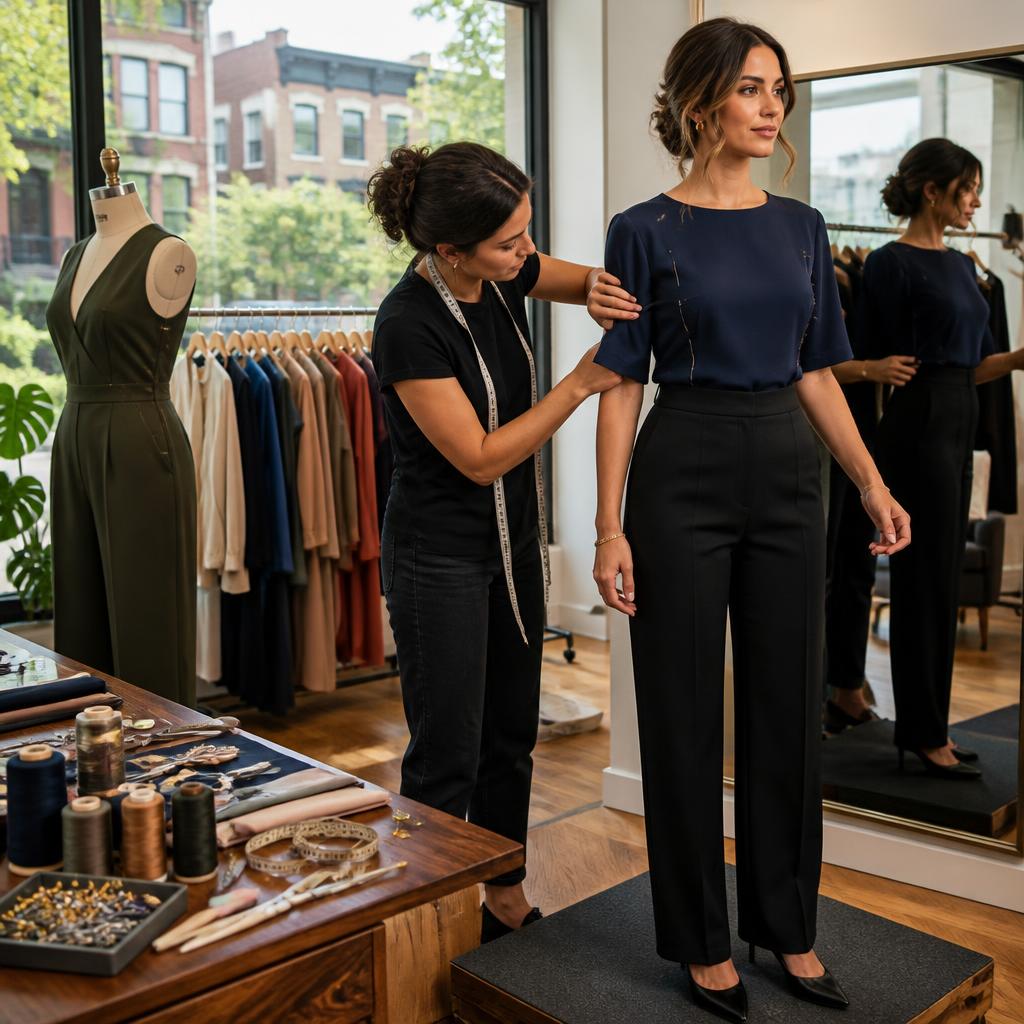
Why a good fit matters
A well-tailored blouse, top, or jumpsuit elevates your whole look—making casual pieces office-appropriate and ensuring evening outfits sit smoothly under a jacket or blazer. Small changes such as adding a dart, taking in a side seam, or adjusting a shoulder can correct common issues like gaping at the bust, a boxy torso, or sleeves that swallow your hands. In Houston Heights, where professional and social events demand polished presentation, targeted alterations are often the most efficient way to refresh your wardrobe without buying new garments.
Common fit problems and the right alteration
Before booking a fitting, identify the problem: does the top gape across the bust, hang loose at the waist, have ill-fitting shoulders, or are the sleeves too long? For jumpsuits, issues often include a low or tight crotch, unclear waist definition, or straps that slip. Each problem has specific solutions—darts to control fabric around the bust, side seams to reshape the torso, shoulder adjustments to reposition armholes, and sleeve changes to alter length and width. Knowing the issue helps your tailor recommend the least invasive, most effective fix.
How darts reshape the silhouette
Darts are a simple but powerful tool to add shape where garments are too boxy or gap at the bust. A tailor places small folds of fabric—vertical or diagonal—into the bodice to contour fabric to your shape, improving fit without changing the garment’s overall style. Darts work well for woven blouses and structured tops; they can be added discretely so the look remains natural. At a fitting, the tailor will mark where fabric pulls or stands away, then test the dart placement before sewing.
Using side seams to taper or let out
Adjusting side seams is the standard solution when the waist or hem of a top is too loose or too tight. Taking in side seams creates a slimmer, more tailored profile; letting out seams (when extra fabric exists in the seam allowance) gives additional room. For fabric patterns or prints, a skilled tailor will match seams so the alteration is invisible. If you want a top tapered only at the waist but looser over the hips, mention that at your fitting so the tailor can shape the garment accordingly.
Shoulder and sleeve adjustments for comfort and proportion
Shoulder seams set the balance of a top; when they sit too far in or out they change sleeve hang and neckline placement. Moving the shoulder seam (or narrowing the shoulder) can correct slouchy or tight armholes. Sleeve alterations include shortening or lengthening, tapering the sleeve width, or adjusting cuff openings. These changes affect movement and proportion—bringing sleeves to the correct length, for example, often requires trying the garment on with the shoes you plan to wear to achieve the right visual balance.
Specific considerations for jumpsuits
Jumpsuits combine torso, waist, and leg adjustments, so alterations often involve multiple points. Common fixes include shortening or lengthening the torso (to prevent riding or sagging), defining the waist by taking in side seams or adding darts, and adjusting the inseam or leg taper for the desired silhouette. Straps can be shortened or repositioned to improve fit at the bust and shoulders, and zippers may be replaced or adjusted to ease wear. Bring the shoes you plan to wear and test movement—sitting and walking should be comfortable after changes.
What to bring to your fitting
Bring the exact undergarments you plan to wear with the garment (including the correct bra), the shoes you will pair with the outfit, and any accessories that affect fit (belts, shapewear). Bring the garment’s original tags if you have them, and photos of the look you want if you have a specific style in mind. Be prepared to explain the event or use—office, formal event, or everyday wear—so the tailor can recommend durability versus delicacy in finishing. If you have a timeline, state it up front; this shop has frequently accommodated rush and same-day requests, but it is prudent to confirm availability at drop-off.
How to communicate with your tailor and what to expect
At drop-off, ask for a clear estimate of cost and an expected pickup time; confirming whether that estimate is fixed or subject to change helps avoid misunderstandings. Expect an initial fitting where the tailor pins or marks adjustments, followed by a second fitting when structural changes are complete. Reviews from local customers often note quick turnaround times and attentive staff—Sam and his team are frequently mentioned for accommodating urgent repairs—but some customers recommend confirming pickup times and pricing in writing to ensure a smooth experience. A thoughtful conversation at the start helps you leave satisfied with the final fit.
Article by
Sam’s Tailoring & Alteration - 3607 White Oak Dr. #2
TOPS | COATS | JACKETS Tapering arms or cuffs Shortening sleeves Adjusting shoulder Side adjustments Adding darts PANTS | DENIM | SKIRTS Hemming / Raw-hem finishing Waist adjustments Tapering legs REPAIRS Replacing button, snap, or hook Repairing a zipper Fixing a fallen hem Closing a popped seam Mending a hole Personalization / Monogramming