Heels, Flats, or Sneakers? How Shoe Choice Changes Your Hem Length — A Houston Guide
Practical guidance on how different shoes affect the ideal hem for pants, skirts and dresses, plus what to bring to your fitting and how to plan for multiple heel heights when getting alterations in Houston.
Why shoe choice matters for hems
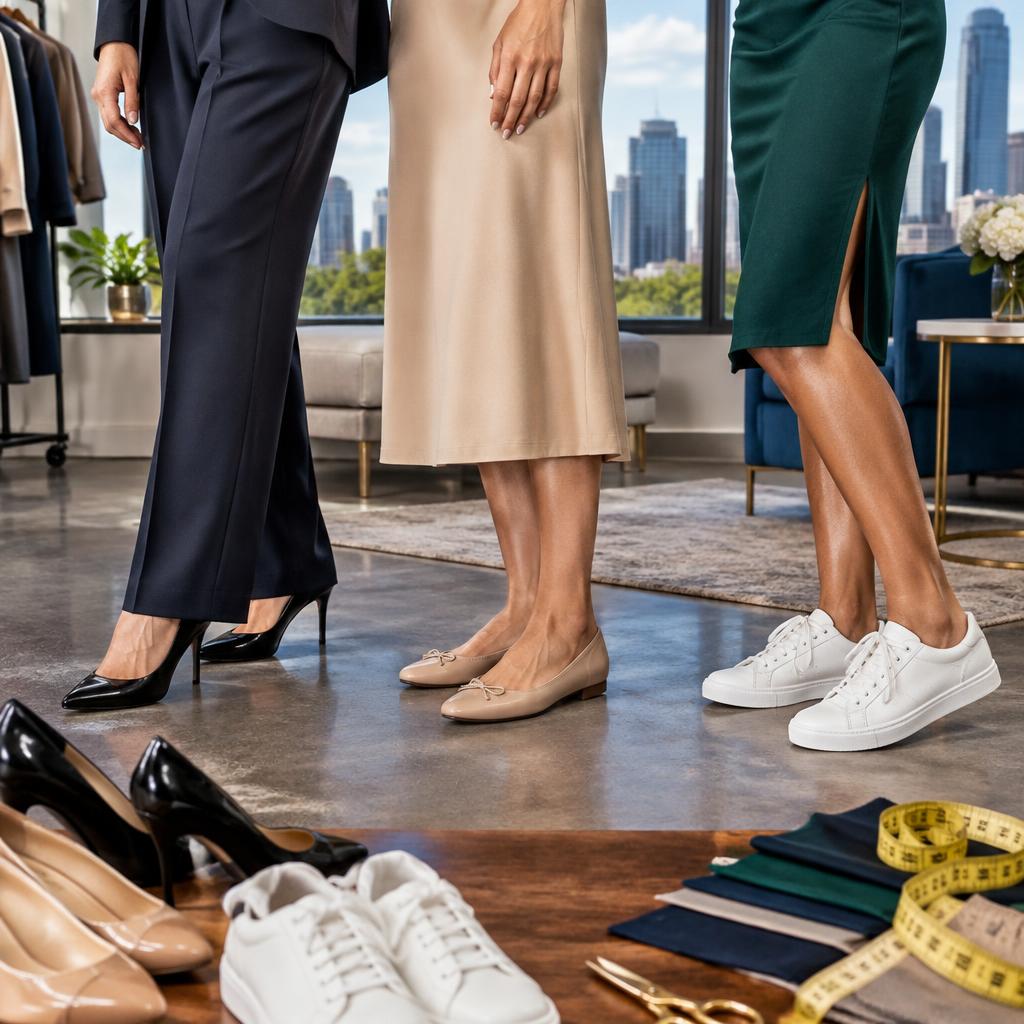
The height and shape of the shoes you wear change where a garment visually lands and how it moves. A change of just an inch of heel often alters the perceived hemline and the way a pant or skirt brushes the shoe. For tailored garments this affects balance, silhouette and comfort—especially for dress trousers, skirts and formal dresses. When you plan a hem or an alteration, the shoes you intend to wear are a functional part of the fitting, not an afterthought.
Pants: office hems versus event hems
For office-appropriate trousers and suit pants, a slight break (a small crease where pant meets shoe) is typical with flats or low heels; it looks neat with dress shoes and loafers. If you normally wear higher heels for events, expect the pant to sit shorter and show more ankle, so communicate whether the garment is primarily for work or for evenings. Tailors can hem to create the classical tailored look for the office or shorten more for an event-ready length—bring the shoes you actually wear to avoid surprises.
Skirts and dresses: proportion and movement
With skirts and dresses, small heel changes can shift a hem from flattering to awkward—especially at midi lengths. Heels tend to raise the hemline and exaggerate leg length, while flats and sneakers make the garment sit lower. For formal dresses (weddings, proms) consider the footwear and the venue: long gowns intended for heels may drag if worn with flats outdoors. When you want a versatile length, discuss options with your tailor such as a hem that suits the higher heel and temporary adjustments for lower shoes.
Casual shoes and sneakers: thicker soles and different breaks
Sneakers and casual shoes often have thicker or more sculpted soles than dress shoes, which can alter both length and 'break' in trousers and cause lighter skirts to catch or billow differently. Platforms and chunky soles can effectively raise the hem by half an inch or more compared with thin-soled flats. If you anticipate wearing sneakers with a tailored piece, bring them to the fitting so the tailor can judge final length and movement against the actual footwear.
What to bring to your fitting at Sam’s Tailoring
For a productive fitting, bring the exact shoes you plan to wear with the garment, any undergarments or hosiery that affect fit, and any accessories—socks, belt or shapewear—that change how the garment sits. If you alternate between two heel heights, bring both pairs. Customers of Sam’s Tailoring & Alteration frequently note fast turnarounds and precise hem lengths; providing shoes and intended outfit components helps the tailor reproduce that perfect result.
Planning for multiple heel heights: practical strategies
When one garment must work with several heel heights, there are a few practical approaches. Decide whether you prefer a single compromise length (typically based on the higher heel for appearance) or whether you want adjustments you can change later. Ask your tailor about temporary solutions such as basting stitches or pinning during the fitting so you can try different heights before the final hem. Discussing these options in advance preserves flexibility without committing to a permanent length you may later regret.
Houston-specific considerations: heat, outdoor venues and surfaces
Local conditions matter. In Houston's heat and frequent summer events people often choose sandals or dressier open shoes, which alter hem expectations from closed dress shoes. Outdoor venues—grass, gravel or uneven sidewalks—can catch long hems and create a trip hazard. For outdoor or rainy-season occasions, consider a slightly shorter hem or reinforced hems that resist wear. Communicate venue and footwear plans to your tailor so they can recommend a length that balances aesthetics and practicality.
Final checklist and next steps
Before your appointment: decide which shoes you’ll wear most often with the garment, pack any alternate heels for comparison, and bring the undergarments or socks you normally use. At Sam’s Tailoring & Alteration, customers consistently praise careful fit adjustments and quick service for time-sensitive needs. Discuss your priorities—appearance, comfort, or flexibility—so the tailor can suggest the best hem strategy for your lifestyle and the shoes you actually plan to wear.
Article by
Sam’s Tailoring & Alteration - 3607 White Oak Dr. #2
TOPS | COATS | JACKETS Tapering arms or cuffs Shortening sleeves Adjusting shoulder Side adjustments Adding darts PANTS | DENIM | SKIRTS Hemming / Raw-hem finishing Waist adjustments Tapering legs REPAIRS Replacing button, snap, or hook Repairing a zipper Fixing a fallen hem Closing a popped seam Mending a hole Personalization / Monogramming